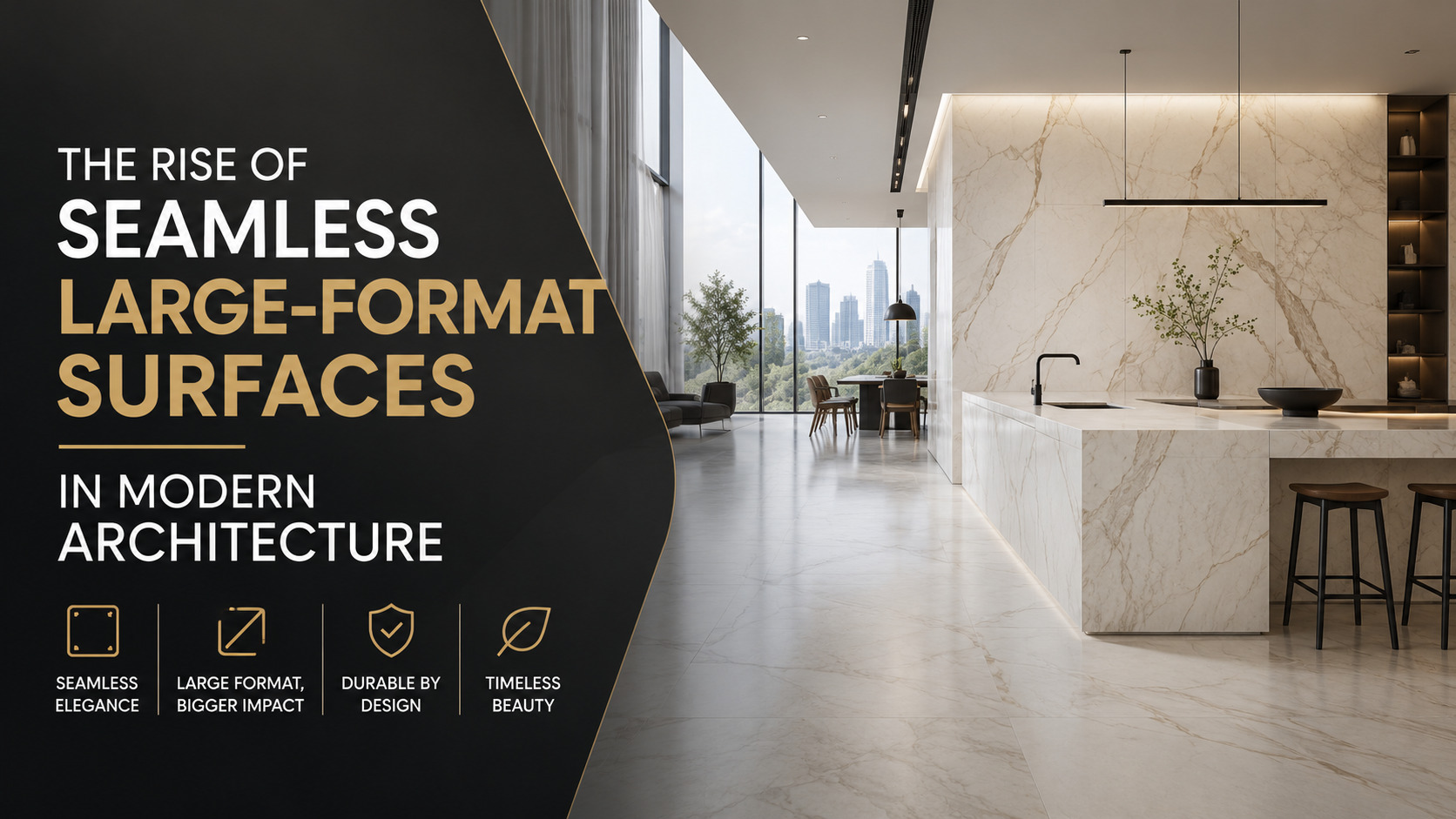
Modern architecture has shifted beyond simply creating aesthetically pleasing buildings. Today, architects and designers strive to develop spaces that seamlessly blend functionality, durability, and timeless elegance. As design philosophies increasingly embrace minimalism, open-plan layouts, and continuous visual flow, large-format surfaces have become one of the defining materials of contemporary architecture.
Whether featured in luxury residences, premium commercial spaces, hospitality projects, or high-end retail environments, large-format surfaces are transforming the way modern interiors and exteriors are designed. Their ability to minimize joints, enhance spatial perception, and deliver a sophisticated finish makes them a preferred choice for architects and interior designers worldwide.
Understanding Large-Format Surfaces
Large-format surfaces refer to oversized slabs or tiles that are considerably larger than conventional formats. Manufactured using advanced technologies, these surfaces are commonly available in engineered quartz, porcelain, and sintered stone.
Unlike traditional tiles that require numerous grout joints, large-format materials cover larger areas with fewer pieces, creating an uninterrupted and seamless appearance.
These materials are increasingly being used for:
- Flooring
- Wall cladding
- Kitchen countertops
- Bathroom vanities
- Kitchen backsplashes
- Reception desks
- Staircases
- Fireplace surrounds
- Building facades
- Commercial interiors
Their versatility allows architects to maintain a consistent design language throughout an entire project.
Why Modern Architecture Prefers Seamless Surfaces
Minimalism has become one of the strongest influences in architectural design. Clean lines, uncluttered spaces, and continuous materials create interiors that feel calm, spacious, and visually balanced.Large-format surfaces perfectly complement this philosophy by eliminating unnecessary visual interruptions.Instead of numerous grout joints breaking the continuity of a surface, larger slabs provide expansive, uninterrupted planes that enhance both aesthetics and functionality.The result is a cleaner architectural expression that emphasizes material quality rather than repetitive patterns.
Creating Spacious and Luxurious Interiors
One of the greatest advantages of seamless large-format surfaces is their ability to visually expand a space.
Every grout line naturally divides a room into smaller sections. By significantly reducing these divisions, large-format materials create an uninterrupted visual flow that makes interiors appear larger and more open.
This is particularly beneficial in:
- Luxury apartments
- Modern villas
- Hotel suites
- Office spaces
- Retail showrooms
- Restaurants
Combined with natural lighting and open-plan layouts, these surfaces contribute to interiors that feel brighter, more elegant, and significantly more spacious.
A New Standard in Contemporary Design
Large-format surfaces have become synonymous with premium architectural design.
Their continuous appearance aligns perfectly with current trends that favor simplicity over excessive detailing.
Architects increasingly specify these materials because they create:
- Seamless flooring transitions
- Continuous wall designs
- Monolithic kitchen islands
- Integrated countertops
- Floor-to-ceiling feature walls
- Consistent surface finishes
This design approach allows materials to become architectural features rather than simply decorative elements.
Superior Aesthetics with Natural Stone Appeal
Modern manufacturing technologies have made it possible to recreate the beauty of natural materials with remarkable precision.
Large-format quartz and porcelain surfaces are available in finishes inspired by:
- Italian marble
- Travertine
- Limestone
- Onyx
- Concrete
- Granite
- Slate
- Terrazzo
Unlike smaller tiles where patterns are interrupted by grout joints, large slabs allow veining and textures to flow naturally across the surface, creating a more authentic and luxurious appearance.
Bookmatched slab installations further elevate this effect by producing dramatic mirror-image patterns that become stunning architectural focal points.
Functional Benefits Beyond Appearance
While visual appeal is a major reason for their popularity, seamless large-format surfaces also provide significant practical advantages.
Reduced Maintenance
Traditional tiled installations require frequent grout cleaning because dirt, moisture, and bacteria accumulate between joints.
Large-format surfaces drastically reduce grout lines, making routine maintenance much easier while improving overall hygiene.
This makes them particularly suitable for kitchens, bathrooms, hospitals, hotels, and commercial environments.
Enhanced Durability
Premium large-format materials are engineered to withstand demanding environments.
Depending on the selected material, they offer excellent resistance to:
- Scratches
- Stains
- Heat
- Moisture
- UV exposure
- Chemicals
- Heavy foot traffic
Their exceptional durability ensures long-term performance with minimal maintenance.
Improved Hygiene
Fewer joints mean fewer areas where bacteria, mold, and dirt can accumulate.
Non-porous materials such as engineered quartz further enhance hygiene by resisting moisture absorption and preventing bacterial growth.
This makes them ideal for food preparation areas, healthcare facilities, and residential kitchens.
Applications Across Modern Architecture
The versatility of large-format surfaces makes them suitable for nearly every type of architectural project.
Residential Applications
Modern homes increasingly feature seamless materials throughout multiple living spaces.
Common applications include:
- Living room flooring
- Kitchen countertops
- Waterfall islands
- Bathroom walls
- Vanity tops
- Shower enclosures
- Staircases
- Feature walls
- Outdoor patios
Using the same material across different spaces creates visual continuity while enhancing the overall architectural experience.
Commercial Applications
Commercial projects demand materials that combine elegance with durability.
Large-format surfaces are widely used in:
- Hotels
- Luxury retail stores
- Corporate offices
- Shopping centers
- Restaurants
- Airports
- Hospitals
- Educational institutions
Their ability to withstand heavy daily use while maintaining a premium appearance makes them an excellent long-term investment.
Large-Format Quartz in Contemporary Kitchens
The kitchen has evolved into the focal point of modern homes.
Today's homeowners seek uninterrupted countertops that combine performance with sophisticated aesthetics.
Large-format quartz slabs allow designers to create expansive kitchen islands and countertops with minimal joints, resulting in cleaner lines and a more refined appearance.
Engineered quartz offers several advantages:
- Non-porous surface
- Excellent stain resistance
- High scratch resistance
- Low maintenance
- Consistent color and texture
- Hygienic food preparation surface
These qualities make quartz one of the most preferred materials for contemporary kitchen design.
Transforming Bathroom Design
Bathrooms are increasingly designed as luxurious wellness spaces rather than purely functional rooms.
Large-format wall and floor surfaces create spa-inspired environments characterized by simplicity, elegance, and tranquility.
Their minimal grout lines not only improve aesthetics but also reduce cleaning requirements and improve moisture resistance.
Combined with concealed lighting and premium fixtures, these materials help create sophisticated bathroom interiors with a timeless appeal.
Sustainability in Surface Design
Sustainability has become an important consideration in modern architecture.
Many manufacturers now produce large-format surfaces using environmentally responsible manufacturing processes, incorporating recycled content and energy-efficient technologies.
Their durability also contributes to sustainability by reducing replacement frequency and minimizing material waste over the building's lifecycle.
Additionally, larger slabs require fewer pieces to cover the same area, reducing installation waste and improving overall project efficiency.
Design Considerations Before Choosing Large-Format Surfaces
Selecting the right surface involves more than choosing a color or pattern.
Several technical factors should be evaluated:
Material Selection
Different applications require different materials.
- Engineered Quartz – Ideal for countertops and interior applications.
- Porcelain – Suitable for floors, walls, and exterior use.
- Sintered Stone – Excellent for high-performance residential and commercial environments.
Thickness
Surface thickness should be selected based on structural requirements and intended use.
Countertops, flooring, wall cladding, and furniture applications each require appropriate thickness specifications.
Surface Finish
Available finishes include:
- Polished
- Matte
- Satin
- Honed
- Textured
Each finish offers unique aesthetic characteristics and varying levels of slip resistance.
Professional Installation
Large-format slabs require specialized handling equipment and experienced installers.
Proper transportation, leveling, joint alignment, and cutting techniques are essential for achieving flawless results.
Emerging Trends Shaping the Future
Large-format surfaces continue to evolve alongside advancements in architectural design.
Current trends include:
- Floor-to-ceiling stone walls
- Bookmatched feature walls
- Waterfall kitchen islands
- Integrated furniture using the same surface material
- Invisible joints
- Neutral earthy color palettes
- Ultra-thin porcelain slabs
- Sustainable engineered surfaces
- Smart antimicrobial finishes
- Indoor-outdoor material continuity
These innovations demonstrate how surface materials are becoming integral components of architectural identity rather than simple finishing products.
Why Architects Continue to Choose Large-Format Surfaces
Architects are constantly balancing design ambition with technical performance.
Large-format surfaces successfully satisfy both requirements by offering:
- Timeless aesthetics
- Structural durability
- Design flexibility
- Low maintenance
- Improved hygiene
- Sustainable material options
- Long-term value
Their ability to deliver uninterrupted visual continuity while meeting modern performance standards makes them one of the most influential materials in contemporary architecture.
Looking Ahead
The increasing demand for seamless interiors reflects a broader shift toward cleaner, more refined architectural environments. Large-format surfaces are no longer considered a luxury reserved for premium developments—they have become a defining element of modern design, offering both visual sophistication and long-term functionality.
As manufacturing technologies continue to advance, these surfaces will become even more versatile, with improvements in strength, sustainability, digital printing, and installation techniques. Architects and designers will have greater creative freedom to develop spaces that are elegant, durable, and tailored to evolving lifestyle needs.
For homeowners, developers, and commercial project planners seeking a balance of aesthetics, performance, and longevity, seamless large-format surfaces represent a forward-thinking investment. Their ability to create cohesive spaces with minimal visual interruption ensures they will remain at the forefront of architectural innovation for years to come.