SPC flooring has become one of the most widely used modern flooring solutions due to its durability, waterproof nature, and stability under varying environmental conditions. It is widely used in residential, commercial, and high-traffic interiors where long-term performance is critical.
To understand why SPC flooring performs so well, it is important to look at how it is manufactured, how its layered structure works, and how each component contributes to its overall strength and functionality.
Understanding SPC Flooring
SPC stands for Stone Plastic Composite or Stone Polymer Composite. It is a rigid core flooring material designed to combine the strength of natural stone with the flexibility and workability of polymer-based materials.
Unlike traditional vinyl or laminate flooring, SPC flooring is engineered through a multi-layer construction system that ensures dimensional stability, water resistance, and long-term durability.
Manufacturing Process Overview
The manufacturing of SPC flooring is a controlled industrial process that involves material formulation, high-pressure compression, and surface finishing.
The process begins with the precise blending of natural limestone powder, polyvinyl chloride (PVC), and stabilizers. This mixture forms the core material that gives SPC its rigidity and strength.
Once the compound is prepared, it is subjected to high-temperature and high-pressure extrusion processes. This step ensures the formation of a dense, stable core sheet with minimal air gaps or internal weaknesses.
After cooling and stabilization, the core layer is cut and prepared for lamination with additional functional layers that define the final performance and appearance of the flooring.
Layer Structure of SPC Flooring
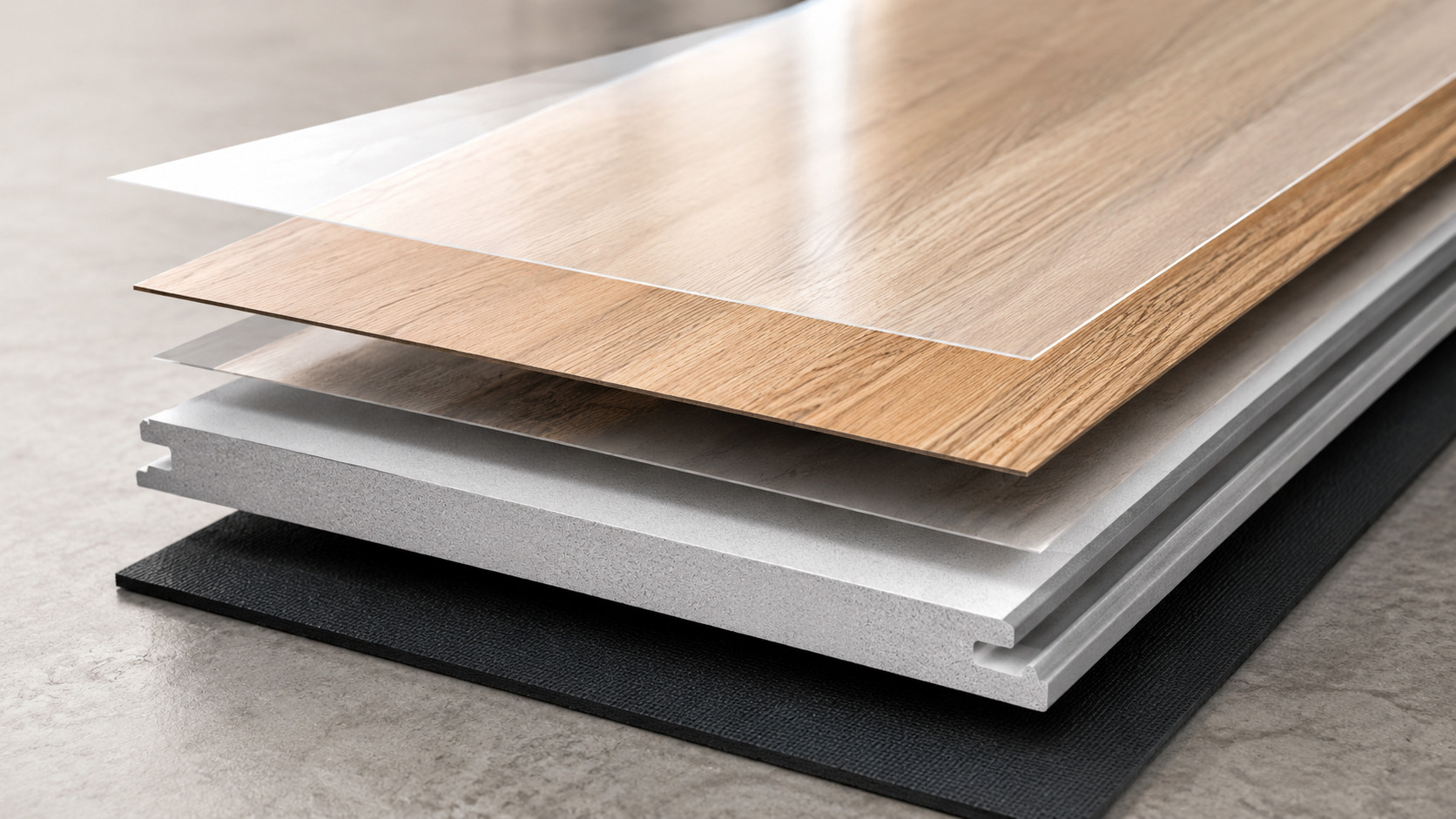
SPC flooring is composed of multiple engineered layers, each serving a specific purpose in performance and durability.
Wear Layer
The topmost layer is the wear layer, which protects the surface from scratches, stains, and daily abrasion. This transparent layer is critical in determining the long-term appearance of the flooring.
Decorative Layer
Below the wear layer lies the decorative film layer, which provides the visual design of the flooring. It can replicate natural materials such as wood, stone, or ceramic with high-definition printing technology.
SPC Core Layer
The core is the most important structural component. It is made from a dense combination of stone powder and polymer materials. This layer provides rigidity, water resistance, and dimensional stability.
The core ensures that the flooring does not expand or contract significantly under temperature or humidity changes.
Backing Layer
The bottom layer, often made from foam or EVA material, provides sound insulation, comfort underfoot, and additional stability during installation.
How Structure Impacts Performance
The layered construction of SPC flooring directly influences its real-world performance.
The wear layer ensures resistance to surface damage, making it suitable for high-traffic areas. The decorative layer allows for aesthetic flexibility without compromising durability. The rigid core provides structural strength and waterproof properties, while the backing layer improves acoustic comfort and installation stability.
Together, these layers create a flooring system that is both visually appealing and functionally reliable.
Key Performance Characteristics
SPC flooring is widely preferred because of its balanced performance profile.
It is highly resistant to water, making it suitable for kitchens, bathrooms, and humid environments. Its rigid core ensures stability even in large temperature variations, reducing the risk of expansion or warping.
The surface is designed to withstand daily wear and tear, making it ideal for both residential and commercial applications. In addition, its low maintenance requirements make it a practical choice for modern interiors.
Role of Manufacturing Quality
The performance of SPC flooring is highly dependent on manufacturing precision. Even small variations in material composition, compression levels, or layer bonding can affect long-term durability.
Advanced manufacturing systems ensure consistent density, strong layer adhesion, and high-quality surface finishing. This results in flooring that maintains both structural integrity and aesthetic appeal over time.
Manufacturers such as Argil Tiles focus on maintaining strict quality control standards to ensure reliable performance in real-world applications.
Conclusion
SPC flooring is a result of advanced material engineering and precision manufacturing. Its multi-layer structure, combined with a rigid core system, delivers a flooring solution that is durable, waterproof, and suitable for modern architectural needs.
Understanding how SPC flooring is manufactured helps in making informed decisions when selecting flooring for residential or commercial spaces, especially when long-term performance and reliability are key priorities.